ChordIQ + Domus PT Talk to us

Simulation acceleration with Physics AI

Faster engineering simulation, without losing the physics.

When simulation is too slow to decide in time, we turn your case into an AI model that is fast, physics-based and verifiable, which answers in seconds and is checked against the reference simulation, with the error measured.

ChordIQ builds the Physics AI technology. Domus brings it into industrial engineering operations.

Diagnosis under NDA, free of charge. WhatsApp · PDF summary (1 page)

CFD + AI Digital twins PINNs Surrogate models Physical verification Optimization
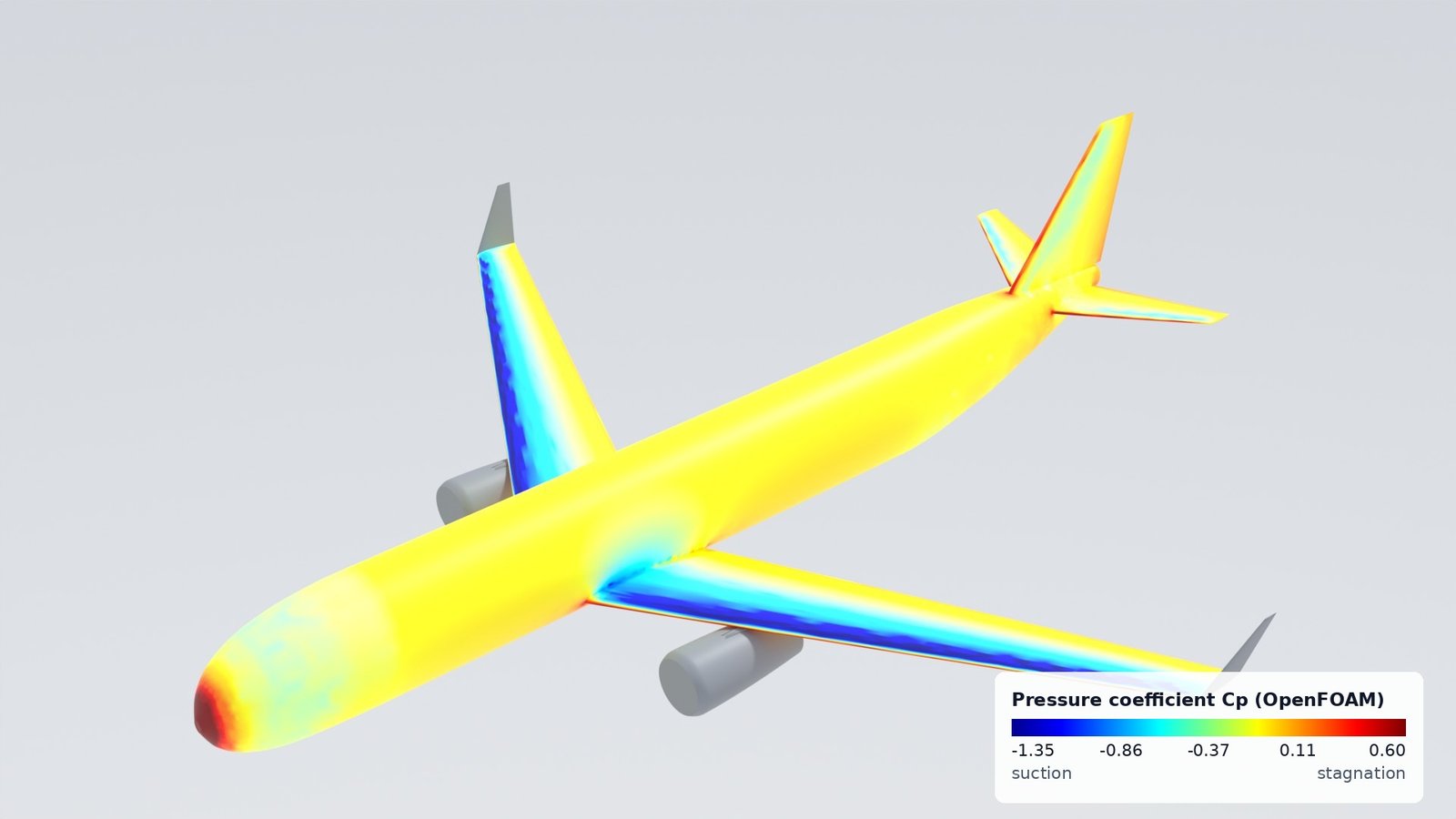
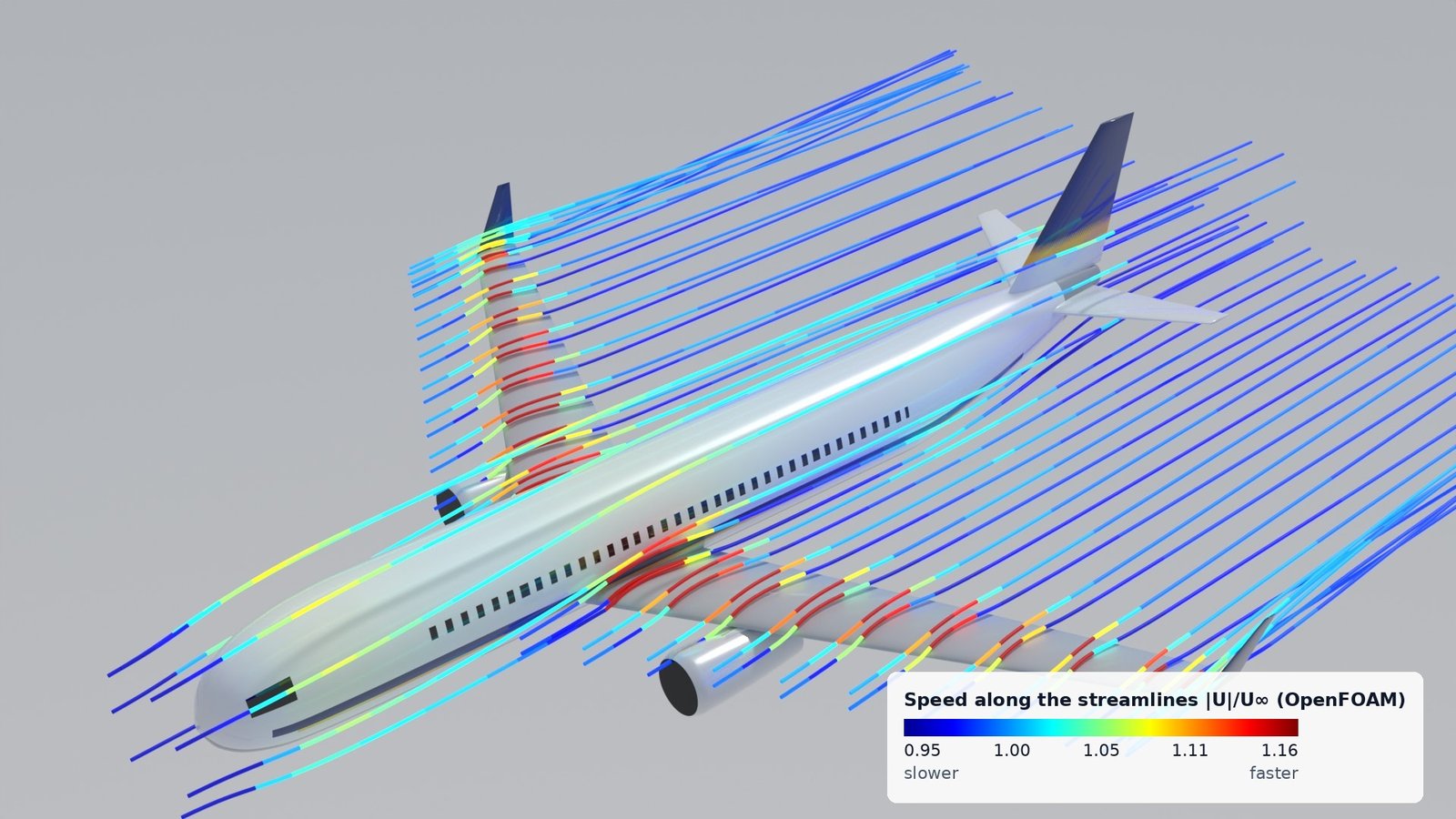
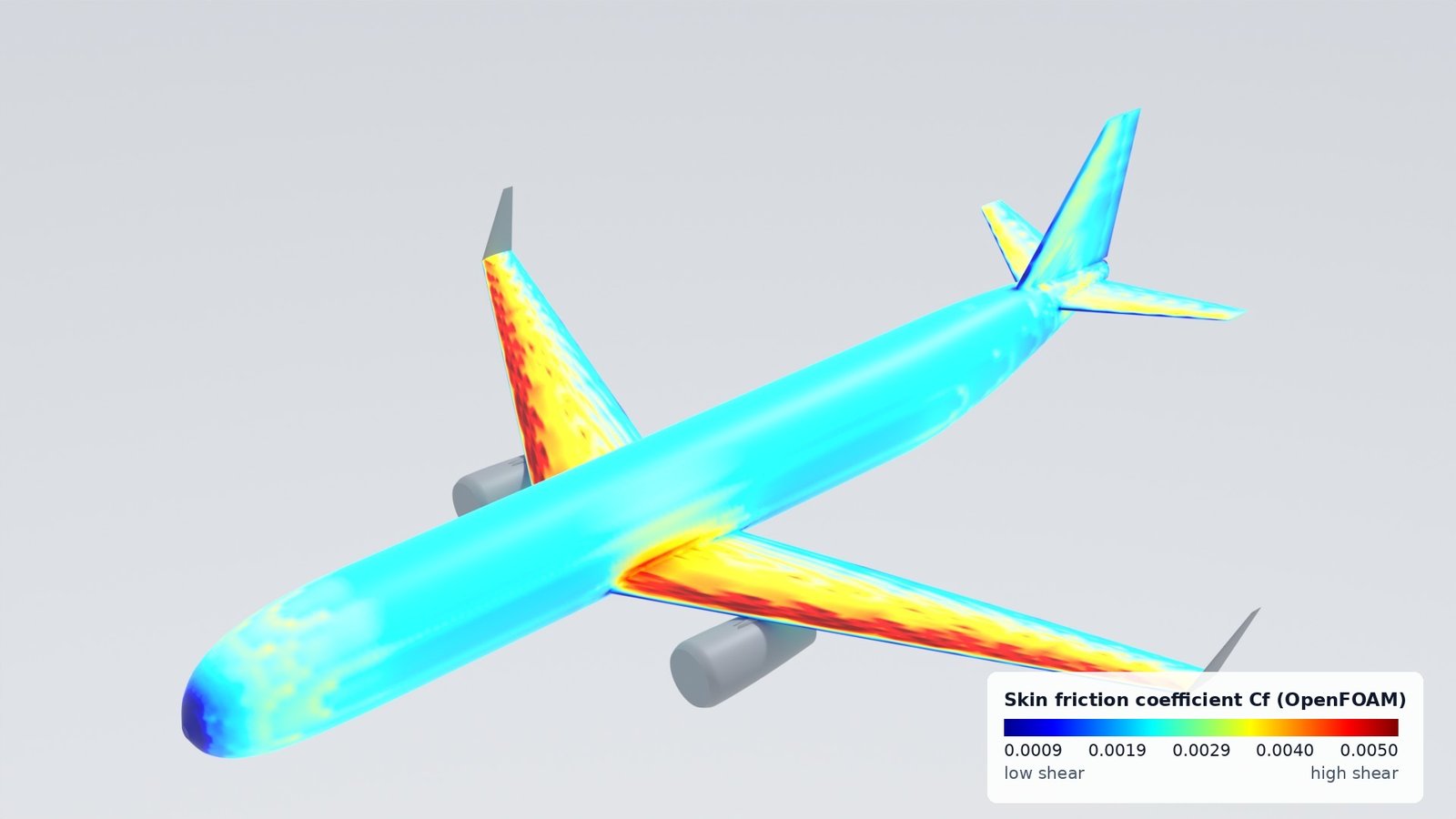
Aircraft Design Optimizer · 3D CFD (OpenFOAM) · skin pressure

Other ways in

What is costing your team time today?

Pick the one that looks most like your situation. Each shortcut leads to one of our projects, with video, measured numbers and limits.

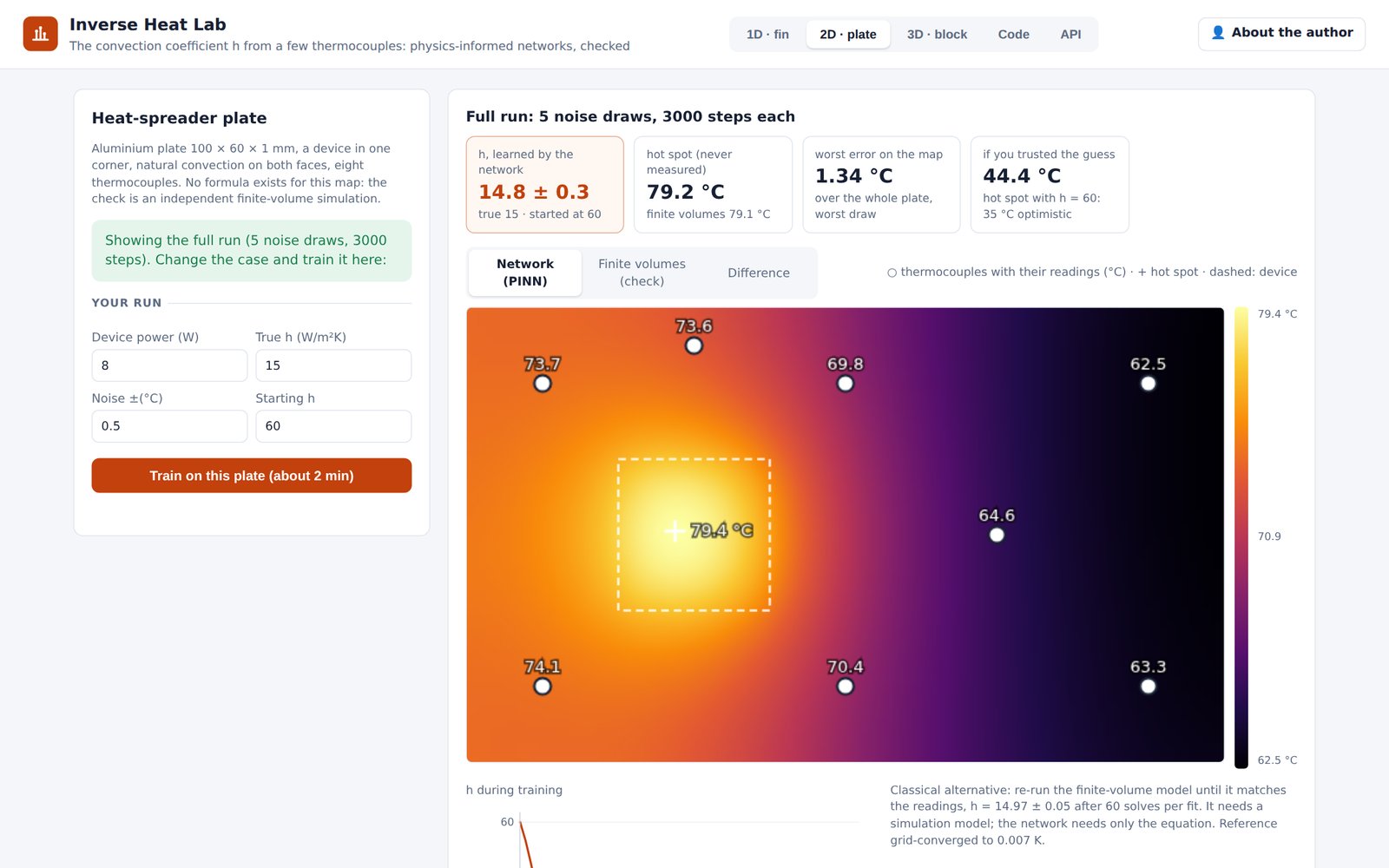
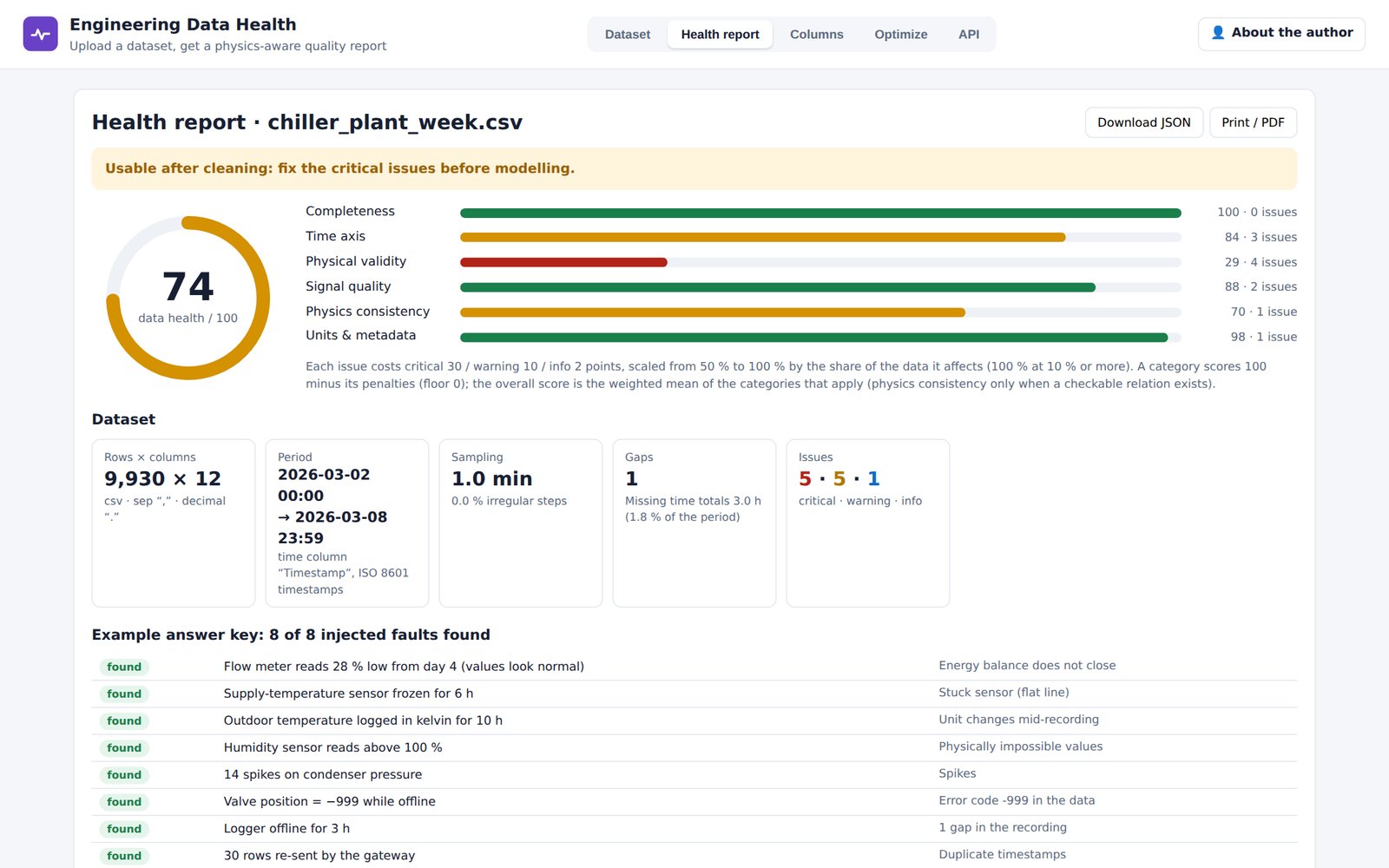
My simulation takes too long to decide Surrogates that answer in milliseconds, checked against the real simulation. See the project → I have to choose among many possible designs Optimization with real trade-offs, and the reason each design was rejected. See the project → I don't trust AI predictions Comparison, mesh and verification before a decision. See the project → I have too few sensors and need to estimate the rest Digital twins and soft sensors: from a handful of sensors to the whole field, with the parameter nobody measured. See the project →
~200,000× faster than the real 3D simulation, in a thermal surrogate model
1.05–1.49× simulated vs. measured erosion, within the factor of 2 the industry accepts
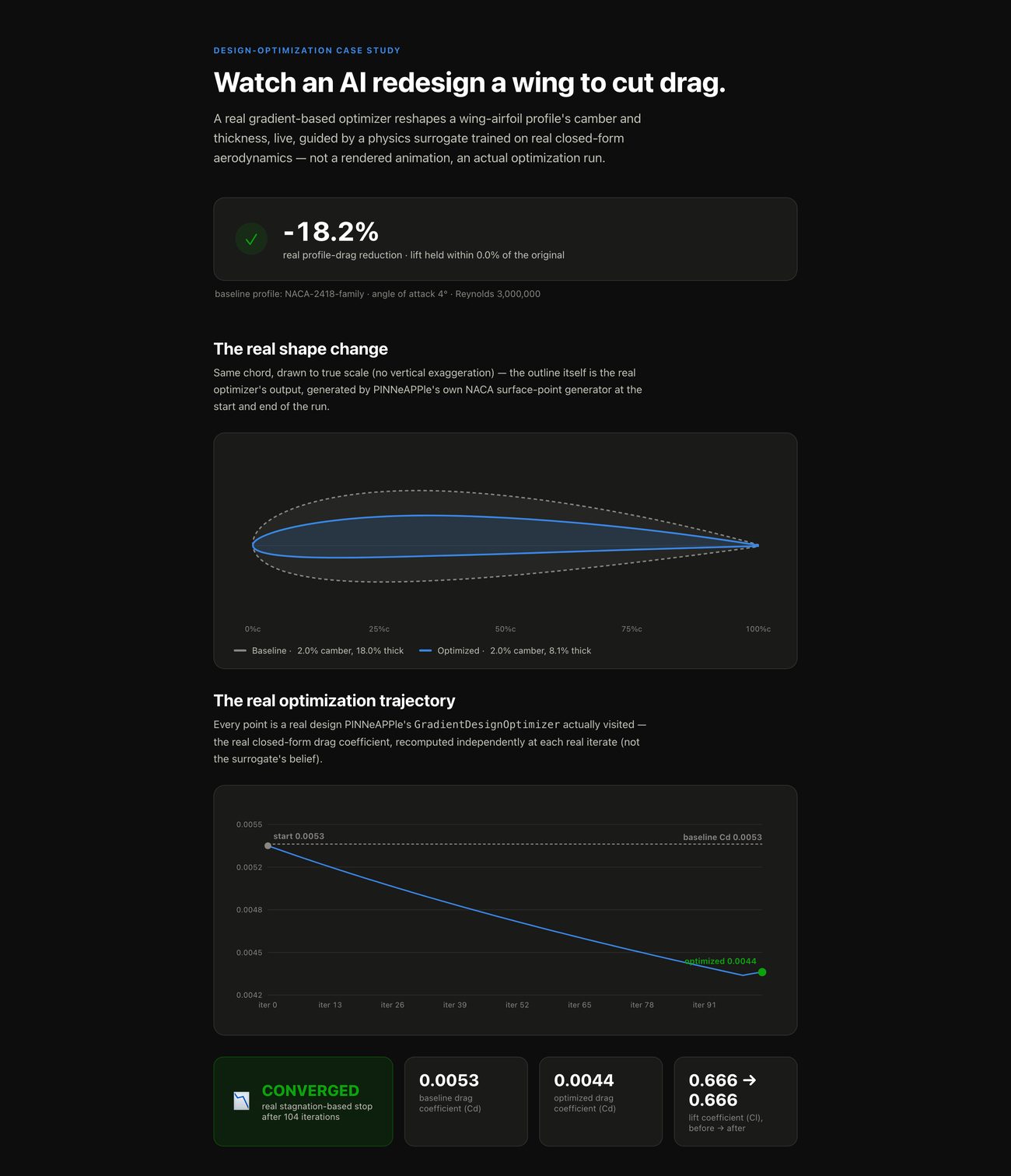
−18.2% less drag on an airfoil, with the target lift held

See it working

An airliner designed by AI and physics, in 96 seconds.

The Aircraft Design Optimizer flies 1,920 single-aisle airliner designs, discards the ones that would not be certifiable and checks the picks in 3D CFD. Calibrated on the A320 first, then optimized: up to −13% CO₂ per passenger-km, inside the 36 m airport gate.

Skin pressure (Cp), computed in 3D OpenFOAMStreamlines coloured by speedSkin friction (Cf)

See the full project →

The problem

Simulation is accurate. AI is fast. Rarely both at once.

Simulation

It is accurate, but it can be too slow to decide in time, too expensive to run on every design sweep or operational decision.

Generic AI

It is fast, but it can ignore the physics of your process and return an answer that is plausible and wrong, with no way to tell which is which.

We combine the two: physics constrains, data calibrates, validation decides.

Physics → Data → Model → Validation → Production

Portfolio

What we've built, working.

Engineering tools that combine physics and AI, from thermal sizing to the design of an aircraft. Each project comes with a video of it in use, the measured numbers and, where one exists, the limit of what it does not cover yet.

See all projects (+7) →

Engineering outcomes

What we help engineering teams achieve.

Where a number measured against a real reference already exists, it is in Technical validations. Operational AI and data assimilation appear in portfolio projects, without a validation published here yet.

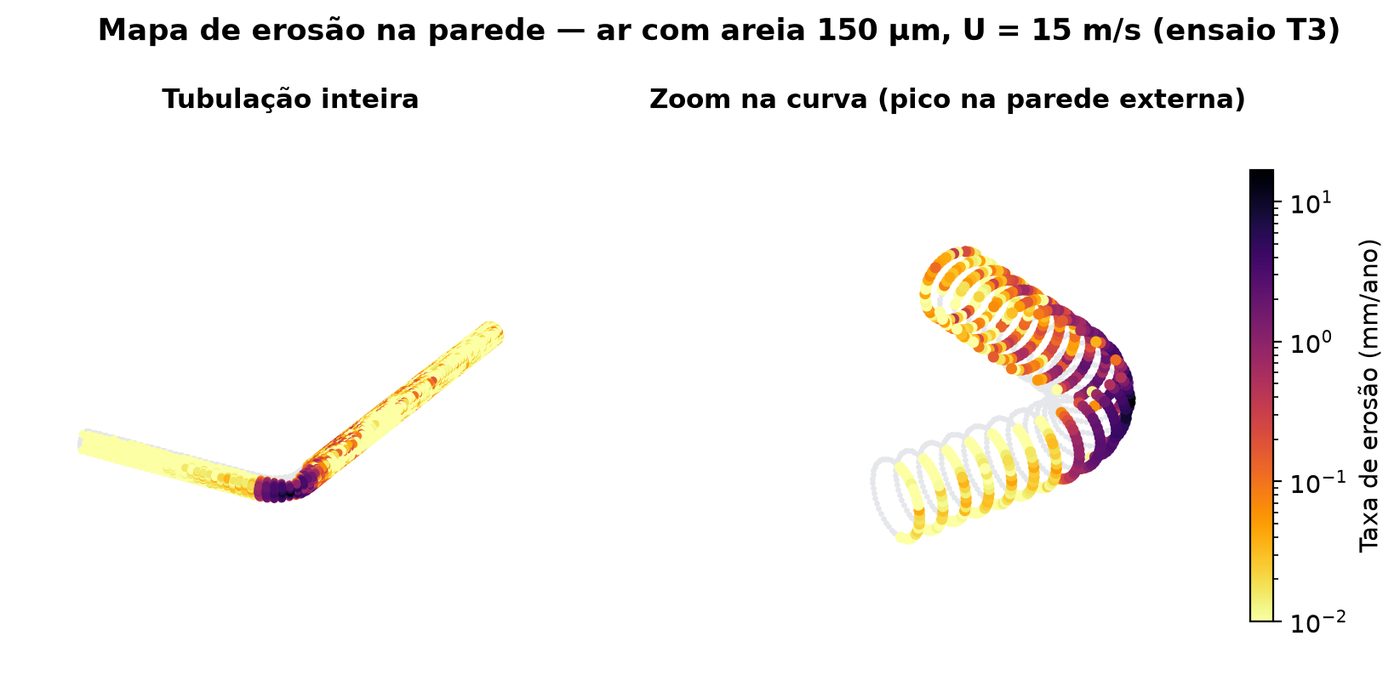
3D erosion map on a pipe bend, computed by CFD

Faster simulations

CFD + surrogate models · PINNeAPPle-CFD

Real CFD (OpenFOAM) to predict where and when a part will wear, with your own geometry uploaded straight to the platform and a surrogate model trained on top to answer scenarios in seconds.

validated against a published experiment, within a factor of 2
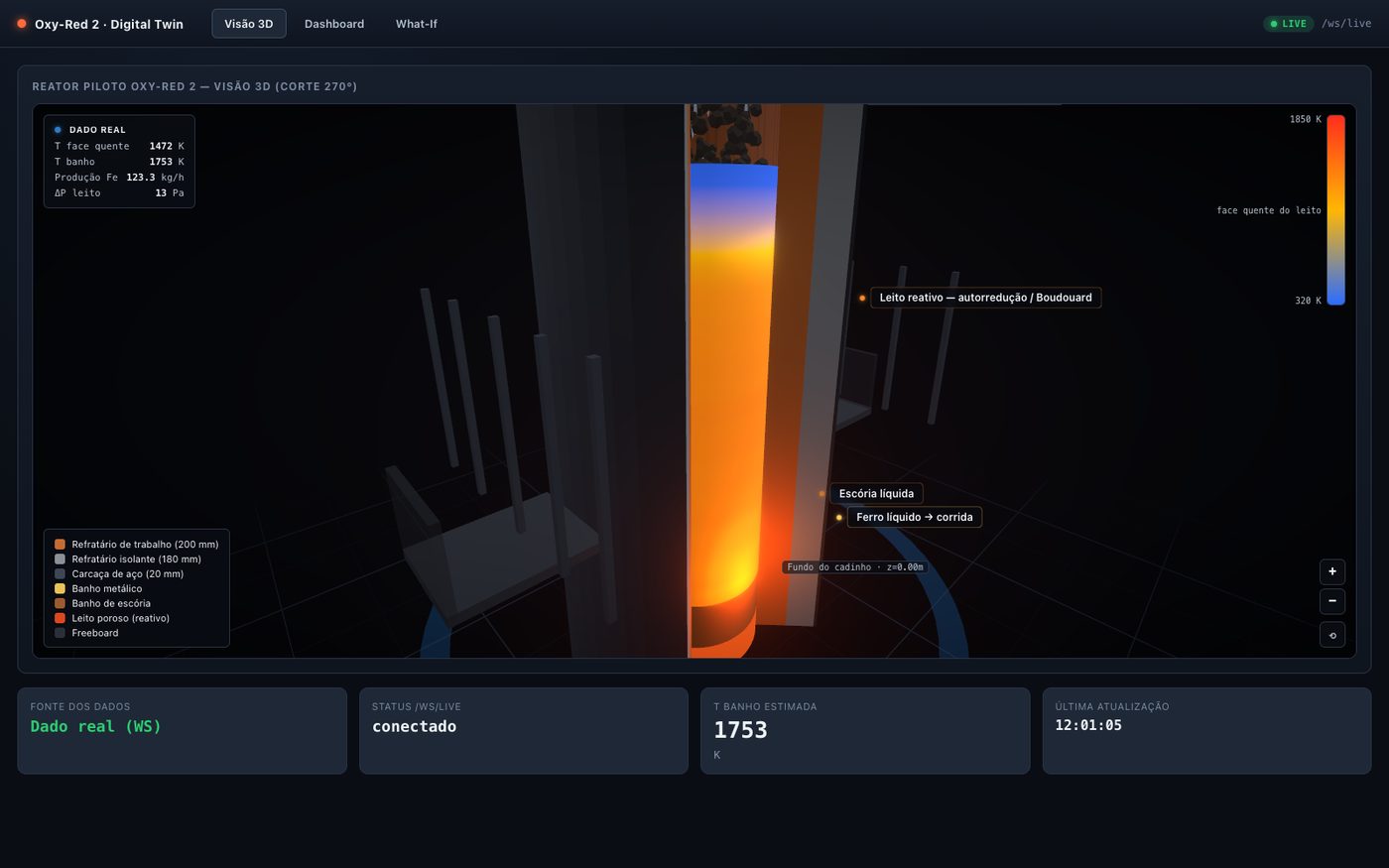
Real-time 3D view of an industrial reactor digital twin

Observable processes

Digital twins + soft sensors

A physical model and AI running live on real plant data: they estimate what is not measured directly, check the mass balance and suggest the operating point.

full physical field from a few sensors
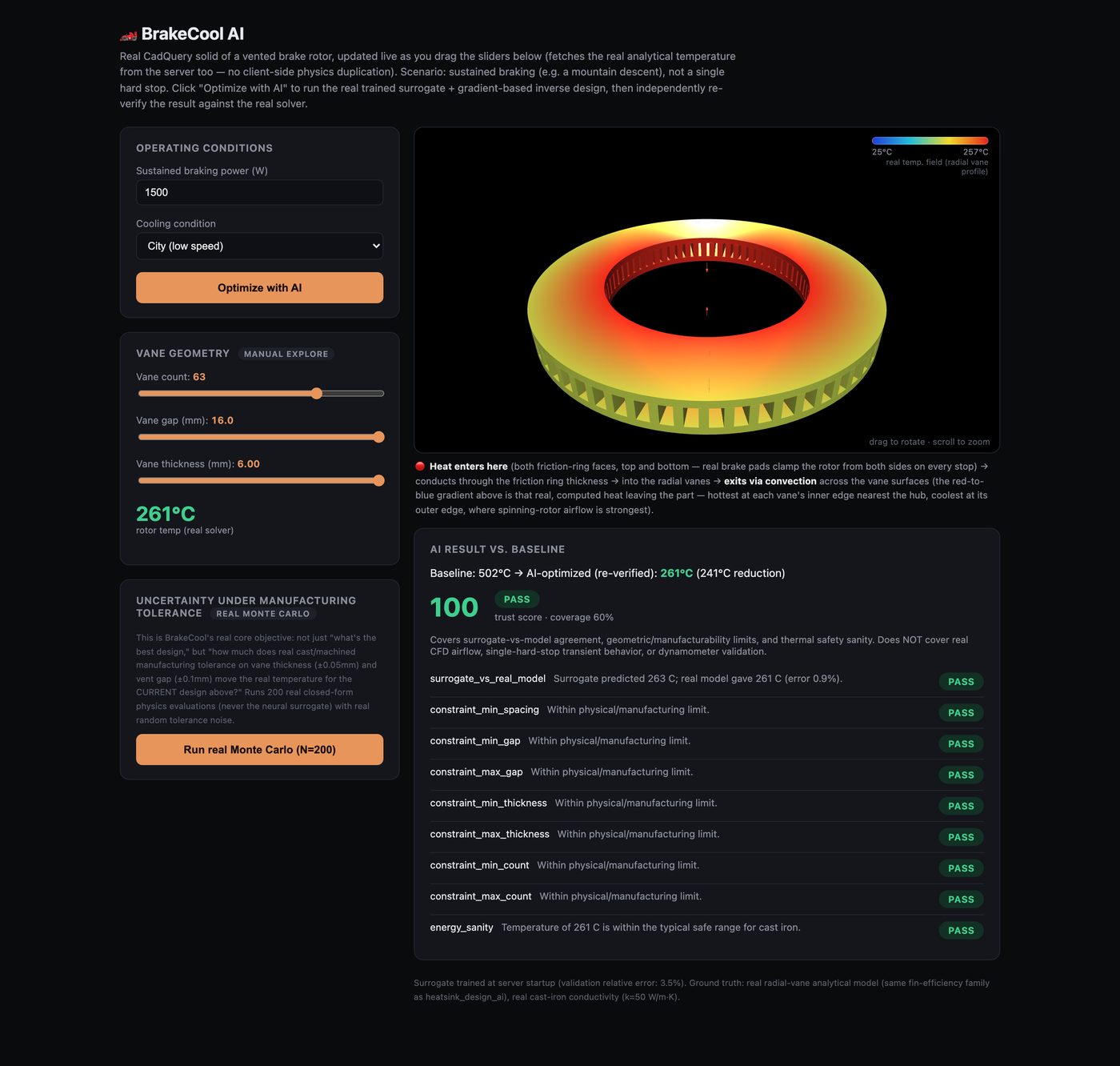
Mechanical part in 3D coloured by temperature, optimized by AI

Better designs

AI-assisted engineering optimization

A model learns the real physics of the component, a gradient optimizer pushes the geometry, and every result is re-checked against the physical model before it reaches the screen.

measured reduction, never just estimated
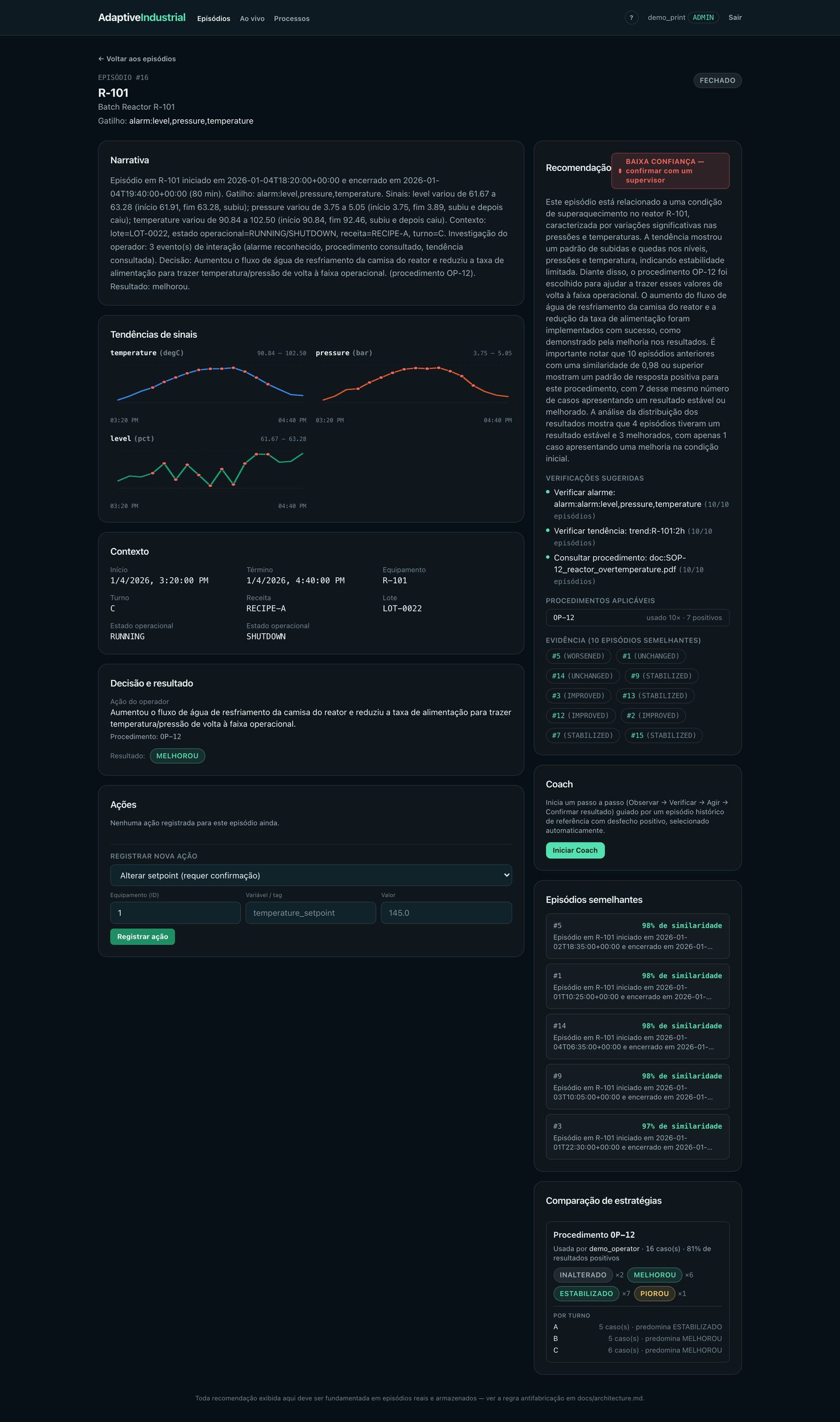
Recommendation screen of an industrial copilot with an episode history

Assisted operations

Operational AI

Turns what experienced operators notice and decide into searchable memory: it compares similar episodes and suggests the procedure with the best track record, with explicit confidence.

never executes anything without human authorization
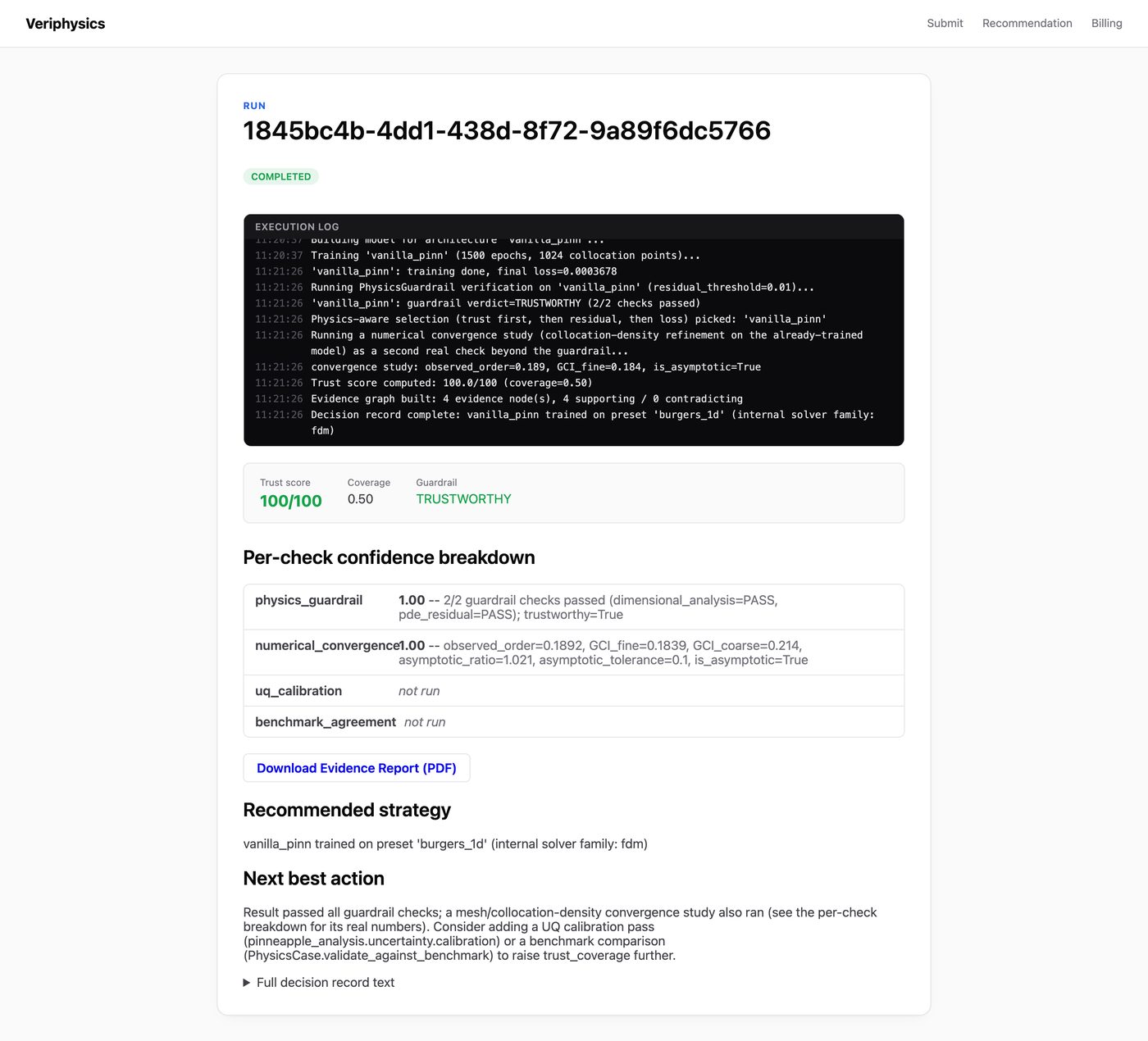
Physical verification report with a confidence score and coverage

Verifiable decisions

Physical and uncertainty verification

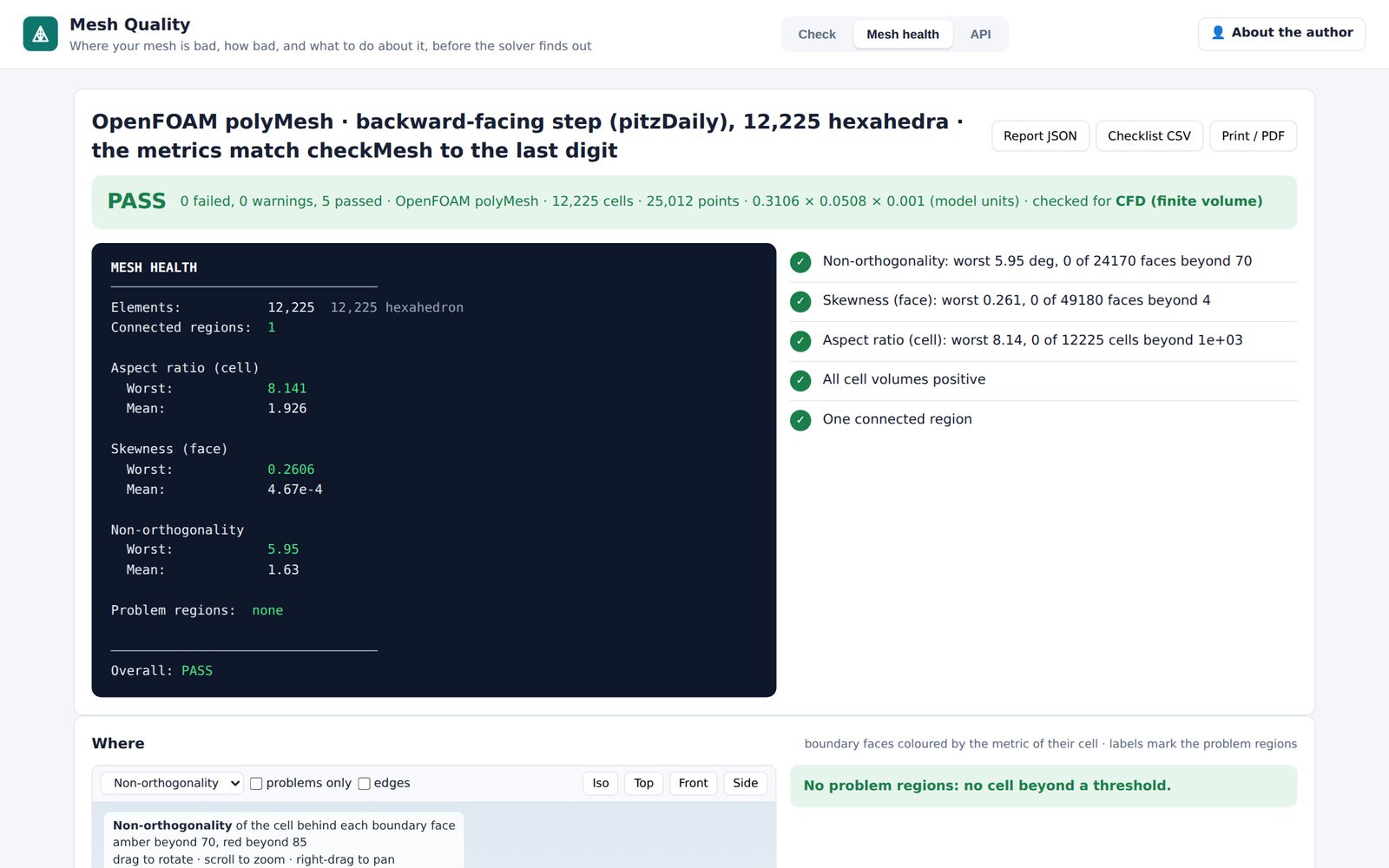
Before trusting a simulation or AI result, we check physical consistency, numerical convergence and uncertainty, with a report that shows exactly what was checked and what was not.

a check that did not run never becomes a made-up score
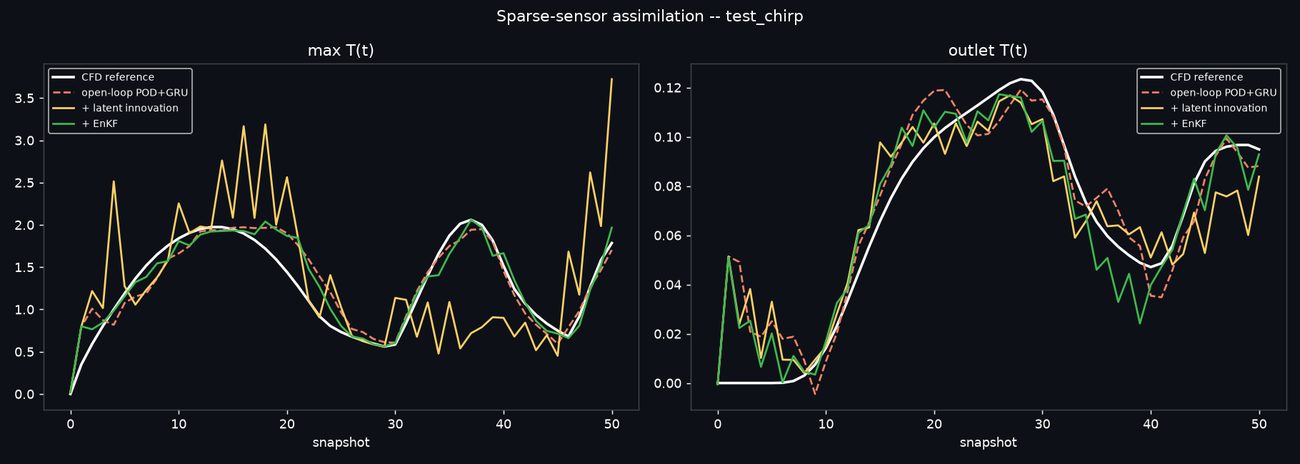
Chart comparing an AI forecast with and without sensor assimilation

Up-to-date models

Data assimilation

Combines the physical model with the few real readings available (ensemble Kalman filter) to correct the forecast live, without instrumenting the whole plant.

accuracy gain measured with the instrumentation you already have

Who it's for

Built for engineering teams in:

We work where the cost of a modelling error is high, from electric arc furnaces to pneumatic conveying pipes. Our technology is horizontal; our experience is applied where simulation, data and engineering decisions carry a high cost, not a promise of equal depth across every industry on the list.

Mining Oil & gas Energy Aerospace Automotive Process industry

Technical validations · articles

Three proofs, with numbers and images.

Each validation below was run end to end and compared against a real reference: a published experiment, a numerical solver or an industry baseline. Click to open the details.

Oil & gas · mining · pneumatic conveying

Erosion in a 90° bend: CFD validated against an open experiment

End-to-end simulation in OpenFOAM, compared against a published experiment, with an AI model trained on top.

1.05–1.49×simulated / measured erosion (target: factor of 2)
1.0%AI error on pressure drop, on new cases
Validateddetails ↓

The simulation landed between 1.05× and 1.49× of the erosion rate measured in the lab in the three experiments tested (Vieira et al., 2016), within the factor-of-2 criterion the industry uses to accept an erosion model. The traditional hand formula, with no CFD, came out about 100× below the measured value in the same regime. The full campaign, 32 simulations from geometry to trained model, ran in 23 minutes for less than R$0.30 of compute, and the resulting AI model answers in milliseconds, with pressure drop at 1% error on points never seen in training.

Power electronics · thermal optimization · product engineering

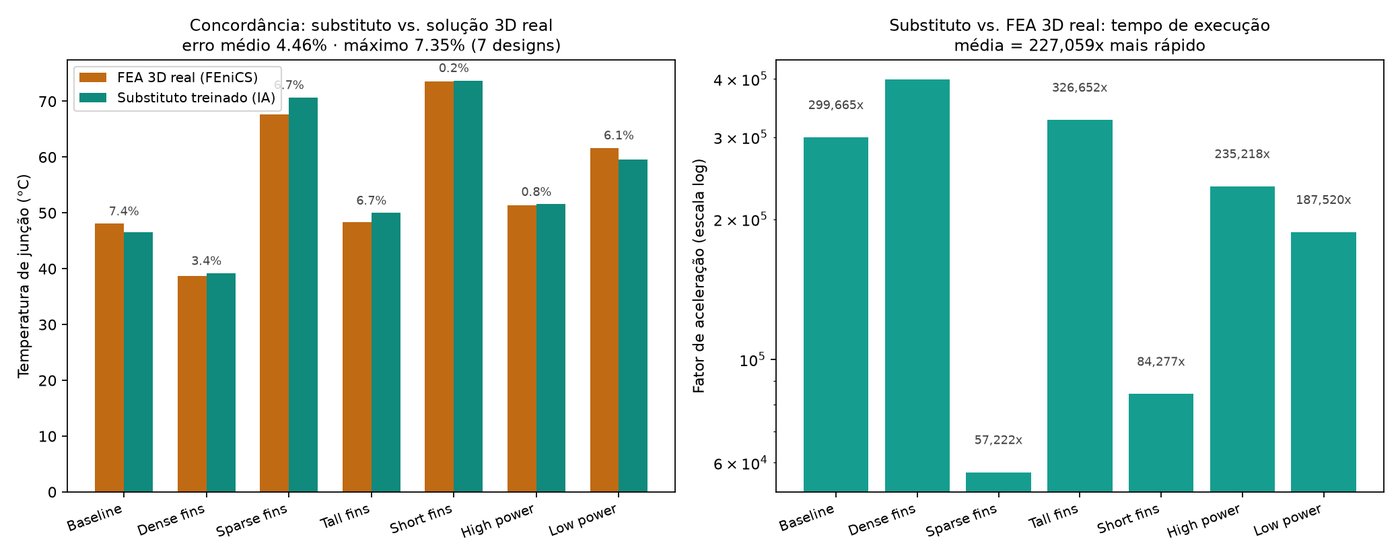
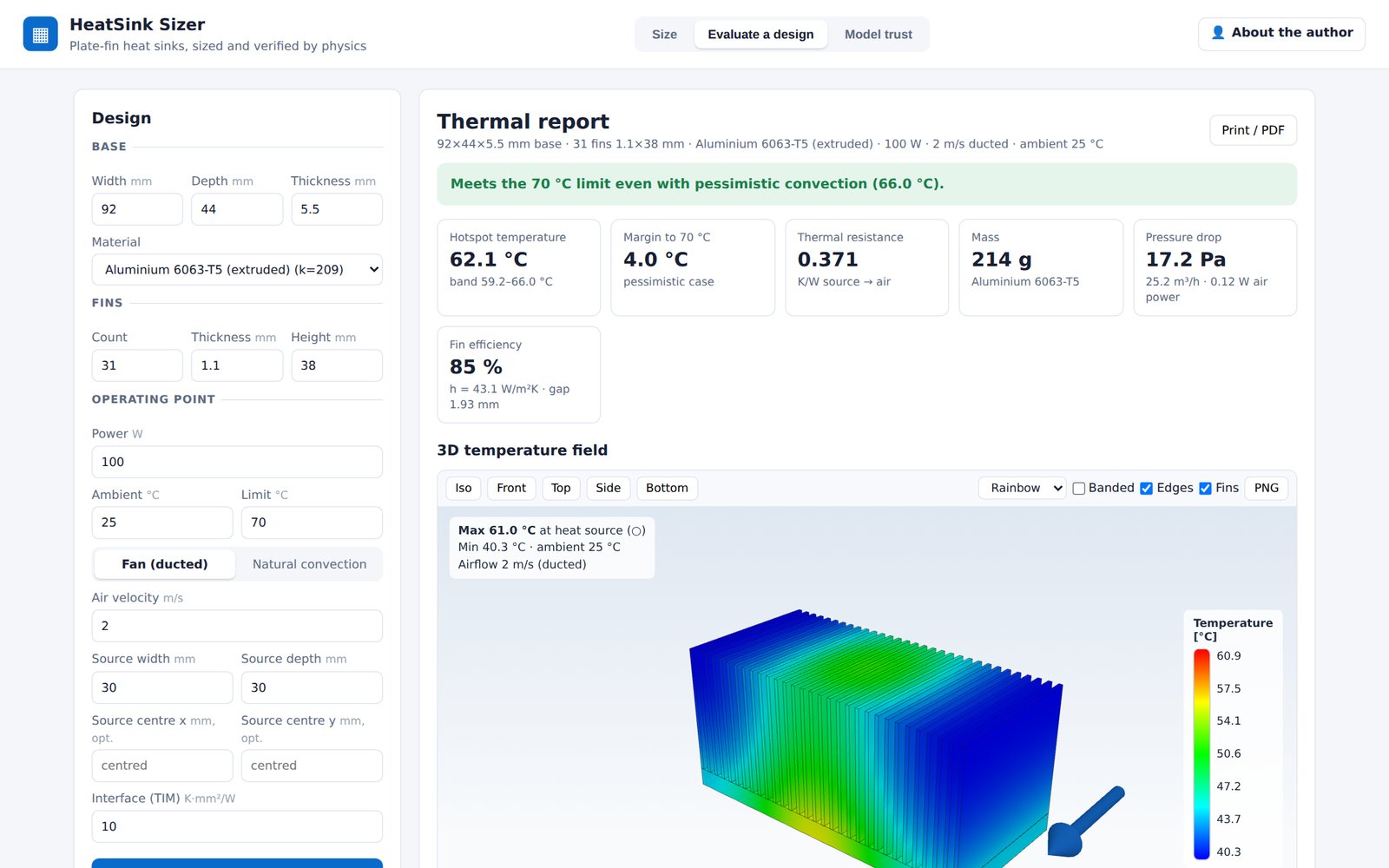
Surrogate model answers about 200,000× faster than the real 3D simulation

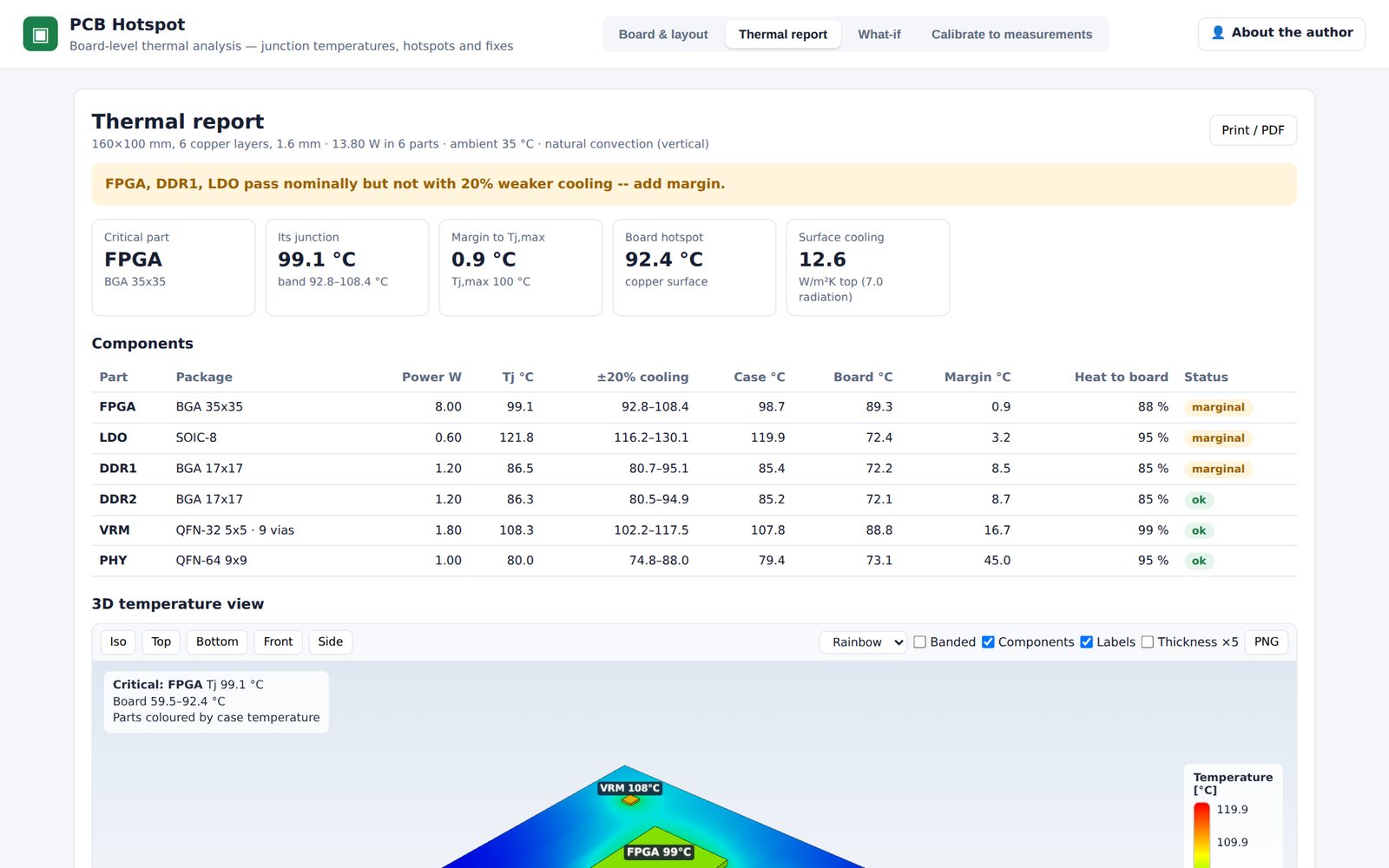
A trained neural network predicts the junction temperature of a heat sink in microseconds, checked every round against a real 3D FEniCS simulation.

~200,000×faster than the real 3D simulation (the exact factor depends on the machine load)
4.46%mean temperature error vs. 3D FEA (worst case: 7.35%)
Validateddetails ↓

Seven real heat-sink geometries, deliberately different from one another (dense, sparse, tall and short fins, high and low power), each checked against a real 3D finite-element simulation (dolfinx/FEniCS, mesh via gmsh), not against another AI model. The surrogate answered in microseconds where the real simulation took 0.6 to 5.9 seconds, with temperature error within 10% in all 7 cases. The same run was repeated three times on different days: the temperature prediction is deterministic (4.46%/7.35% identical every time); only the speed-up factor changes with the machine load at the time of the test.

Aerospace · automotive · energy efficiency

Real airfoil optimization cuts drag by 18%

A gradient optimizer guided by a model trained on the real physics of the profile, with re-verification at every step.

−18.2%profile drag
0.04%change in the target lift
Validateddetails ↓

104 real iterations of a gradient optimizer, every point of the trajectory recomputed against the physical model (not only against what the network learned), converging on a final profile inside the structural manufacturing limits. It is the same method, surrogate-guided optimization with physical re-verification at every step, that we apply to geometry in any domain: ducts, heat exchangers, structures and mechanical parts.

See all 15 technical validations

Automotive · aerodynamics · R&D

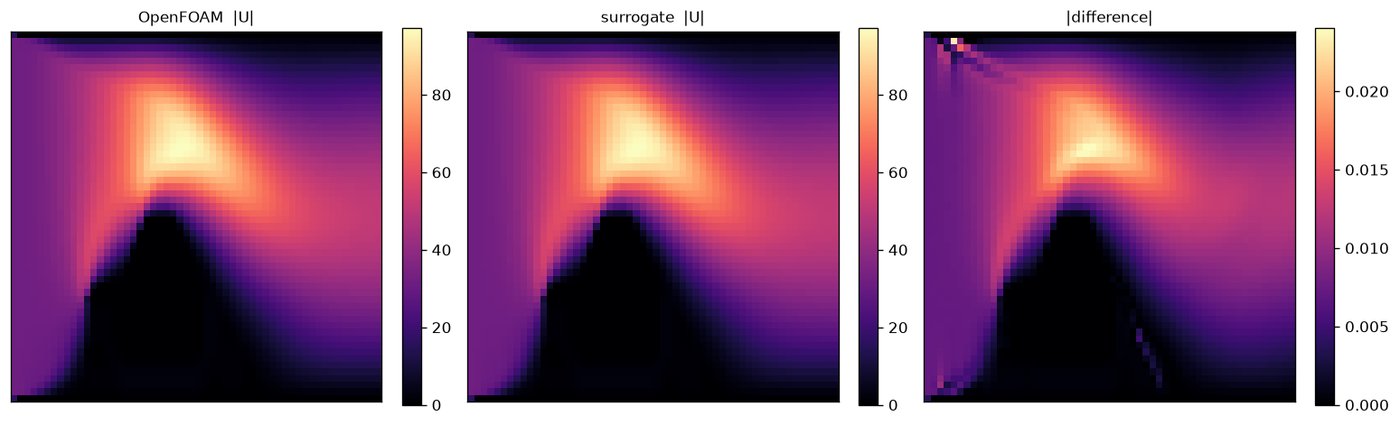
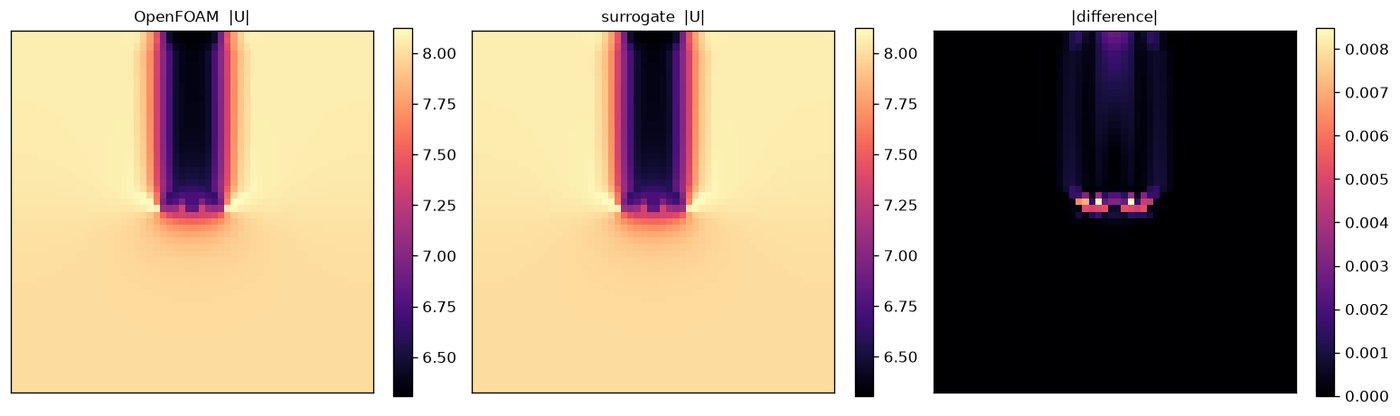
Vehicle aerodynamics digital twin answers in milliseconds

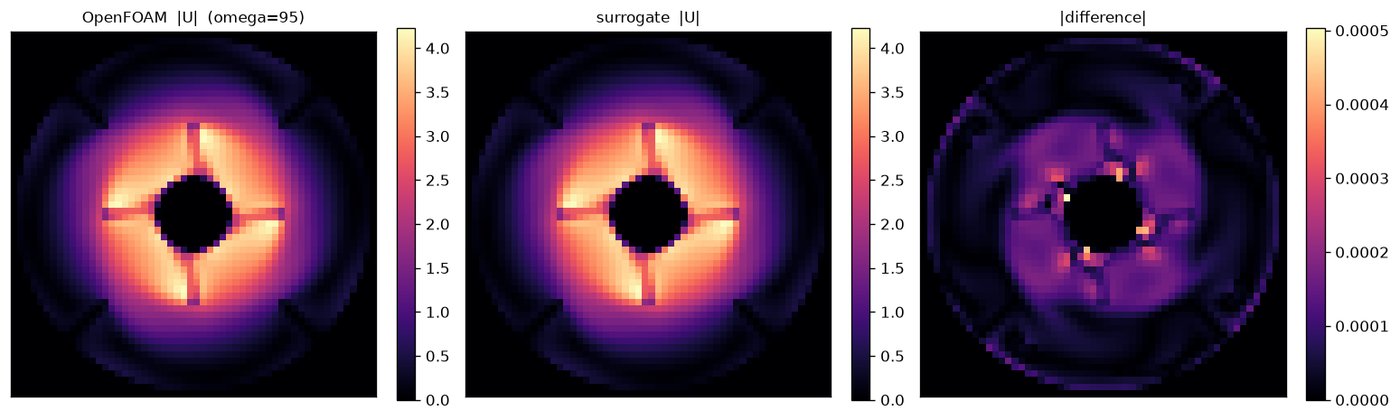
10 real OpenFOAM (simpleFoam) simulations of a car silhouette, reduced by POD and learned by a surrogate, become an interactive digital twin.

0.05%velocity-field error vs. OpenFOAM
1.3%mean error on the coefficients (Cd, Cl, velocity)
Validateddetails ↓

Ten real OpenFOAM runs between 12 and 48 m/s of relative wind, reduced to 6 POD modes (0.006% reconstruction error) and learned by a surrogate that predicts the full velocity field and the aerodynamic coefficients (Cd, Cl) at any intermediate speed never seen in training. The predicted Cd follows the real curve captured by OpenFOAM's own forceCoeffs , including the inflection above 44 m/s, with 0.17% error specifically on Cd.

Engineering verification · mechanical design

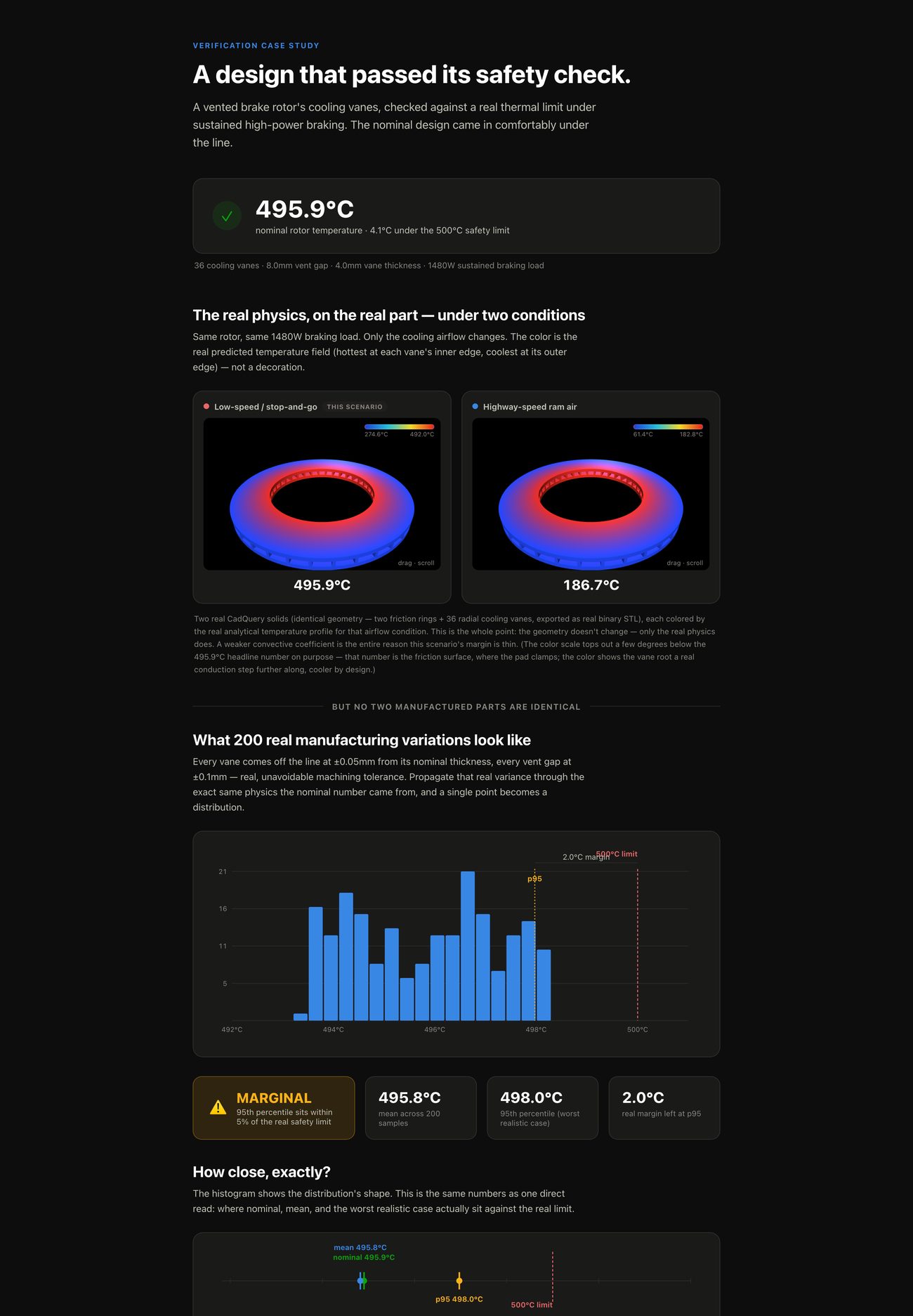
Monte Carlo reveals the real margin of an "approved" design

A brake disc passes the nominal test. The real manufacturing tolerance tells a different story.

495.9 °Cnominal (safety limit: 500 °C)
1.9 °Creal margin under manufacturing tolerance
Validateddetails ↓

On paper, the design had 4.1 °C of headroom to the safety limit. Propagating the real manufacturing tolerance (±0.05 mm in thickness) through 200 Monte Carlo parts, the 95th percentile reaches 498.1 °C, a real margin of only 1.9 °C. No part fails the test, but the confidence in the "approved" changes completely. This is exactly the kind of check we apply before any engineering decision leaves the screen for production.

Space robotics · agriculture · off-road machines

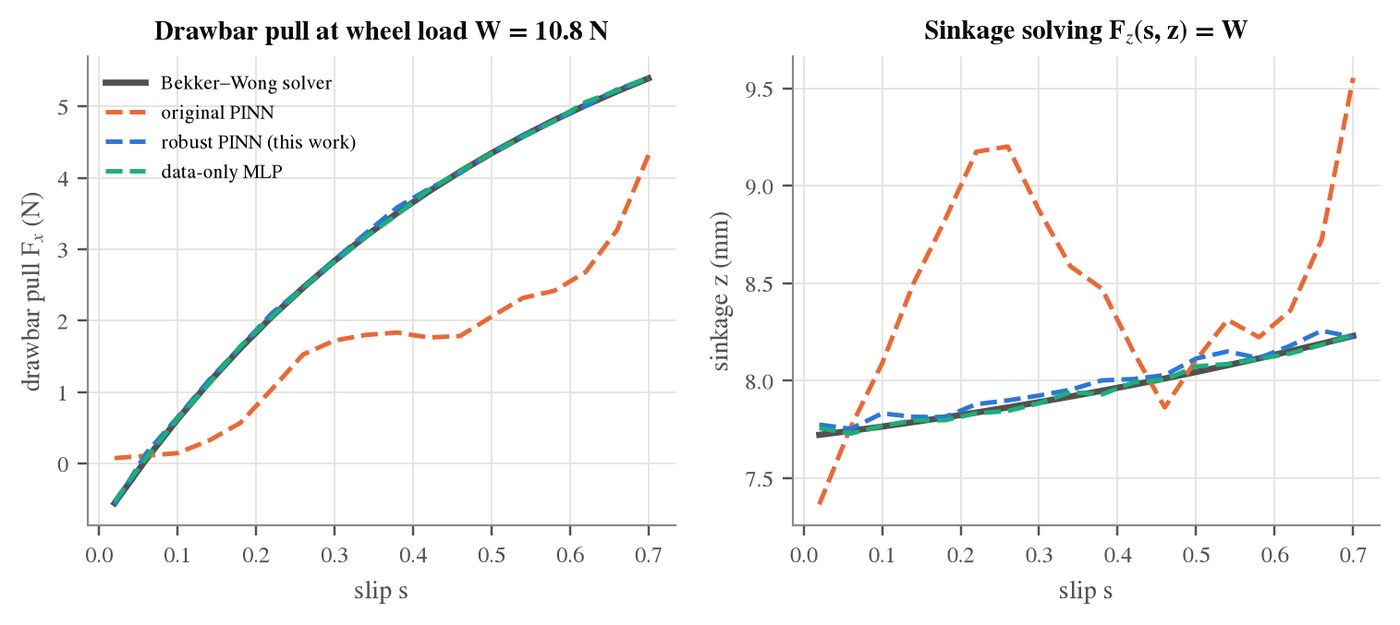
Rover mobility: we fixed a published AI model and recommended the classical method

A published AI model failed physically. We diagnosed the problem, built a robust version and recommended not using it in production.

0.7–3.8%error against the reference solver
45×less traction error than the original model
Validateddetails ↓

The corrected version reproduces the traction force of the classical physical model (Bekker–Wong) with a traction error 45× smaller than the original published version, and three physical constraints are now guaranteed by construction, not only by training. The most honest part of the work came after: the cost analysis showed that, for this specific problem, a well-implemented classical numerical method is faster and more accurate than the AI itself, and that method was our recommendation, not the flashier path. See more about that decision in Principle.

Fishing · climate · offshore energy

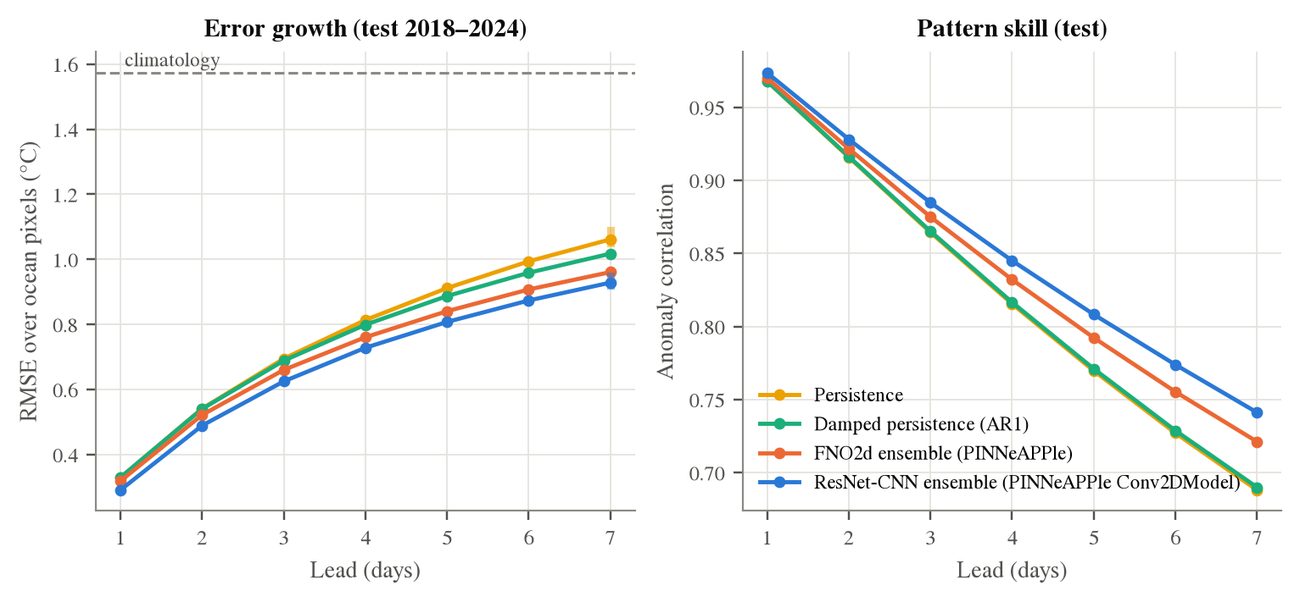
Sea-temperature forecast beats persistence at every horizon

An ensemble trained on 43 years of real satellite data, tested against the industry-standard reference.

−12%lower error at 7 days, vs. persistence
7/7horizons (1 to 7 days) where the model wins
Validateddetails ↓

Tested on data never seen in training (2018–2024), in one of the most turbulent regions of the South Atlantic, the model beats persistence, the hardest reference to beat in short-term forecasting, at every horizon, from 1 to 7 days, with a confidence interval calibrated against real data. The gain is real but moderate, useful for offshore operations and fishing, not a promise of perfect accuracy.

Fluids lab · wind tunnel · R&D

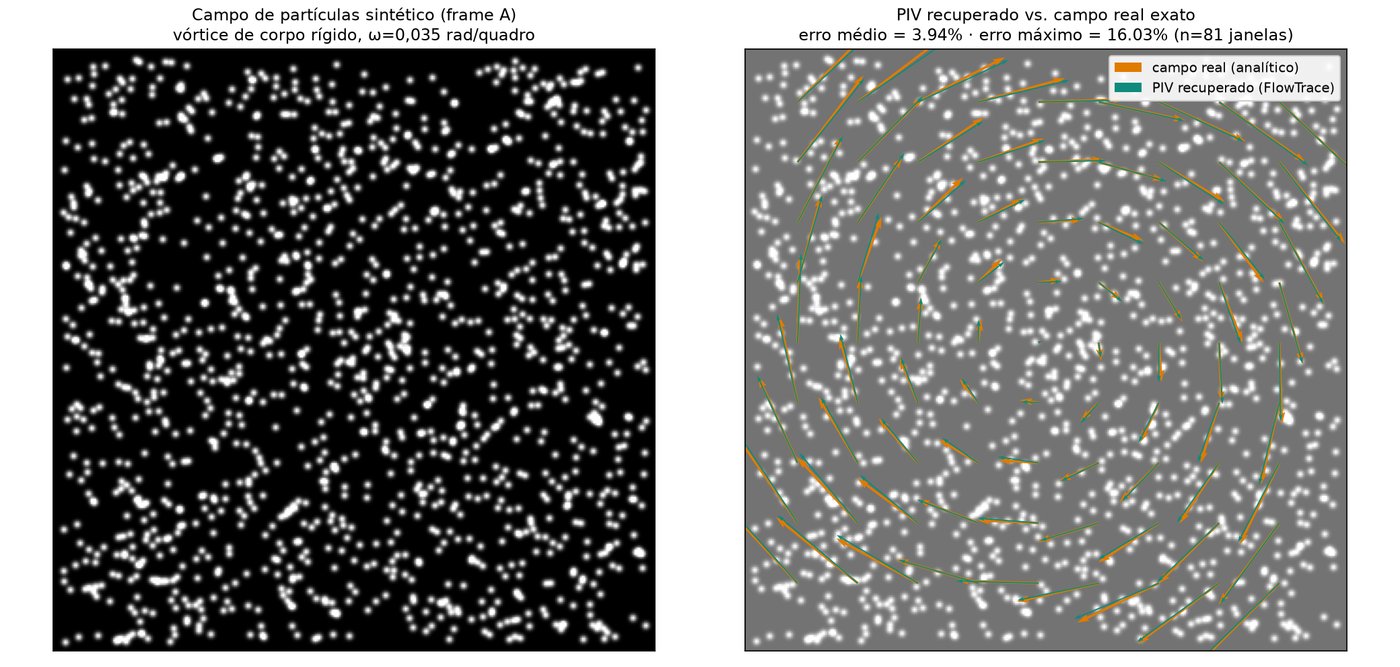
Software PIV recovers a vortex field with 3.9% error

A synthetic particle-image pair, a vortex field with an exact analytical solution, processed by the same cross-correlation algorithm that runs in production.

3.94%mean relative error vs. the exact analytical field
81velocity vectors recovered in a single pass
Validateddetails ↓

Each synthetic particle was displaced by the exact rotation matrix of a rigid-body vortex, not by an image approximation, so the reference carries no discretization error of its own. Running the real cross-correlation algorithm (the same one that serves the production endpoint) on the image pair, the recovered vectors reproduce the rotational structure of the flow with 3.94% mean error and 16% at the worst point (near the vortex centre, where the true velocity tends to zero), with no camera hardware, laser or proprietary software, just video and processing.

CAD/CAE · interoperability · data engineering

Mesh converter removes 100% of the defects of a legacy export

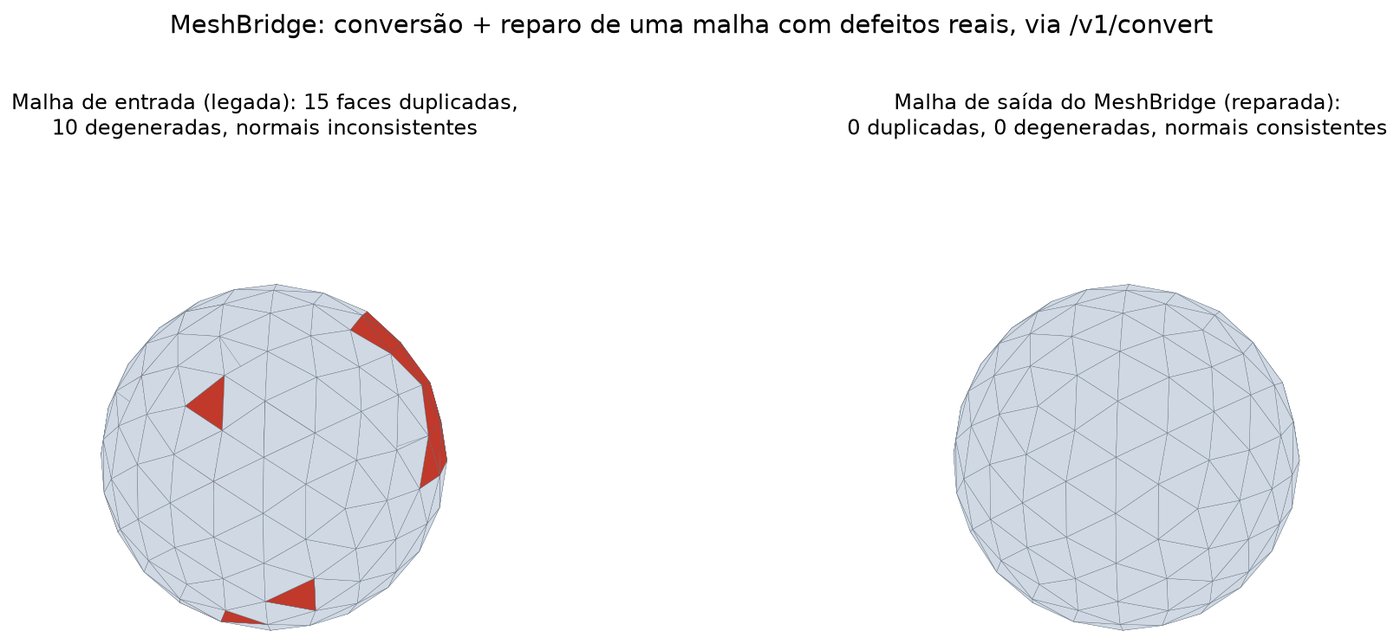
A mesh with typical legacy-export defects (duplicate faces, degenerate faces, flipped normals) processed by the real conversion and repair endpoint.

25/25defective faces removed (duplicate + degenerate)
100%consistent normals after the repair
Validateddetails ↓

A real mesh was deliberately damaged the way legacy CFD/CAD exports usually arrive: 15 exact duplicate faces, 10 degenerate (zero-area) faces and 20 faces with flipped normals. Run through the real HTTP conversion endpoint with repair enabled, the result had zero duplicate faces, zero degenerate faces and consistent normals : all three checks passing against the production endpoint, not an isolated simulation. Honest note: the automatic repair does not fill holes by default today, it only removes duplicates/degenerates and fixes normals. That is exactly what is live, nothing more.

Wind energy · turbomachinery

Wind-rotor digital twin predicts wake, thrust and torque

9 real actuator-disc simulations of a rotor in OpenFOAM, covering 200 to 2,300 RPM, learned by a surrogate that predicts the wake field and the three operating scalars.

0.24%wake-field error vs. OpenFOAM
0.9%mean error on thrust, power and torque
Validateddetails ↓

Nine real runs of OpenFOAM's actuator-disc rotor case (blade-element momentum model, a single reused mesh), each varying only the rotation speed. Thrust, power and torque come from actuator-disc momentum theory applied to the truly resolved wake, not from a solver-native writer. The surrogate reproduces both the wake field and the three scalars with less than 1% mean error, at any rotation speed between the simulated points.

Chemical processes · pharma · industrial mixing

Stirred-tank digital twin gets the known physical scaling law right

10 real OpenFOAM (MRF) simulations of a stirred tank, covering 15 to 190 rad/s, with the surrogate recovering the known power-vs-speed physics.

0.01%velocity-field error vs. OpenFOAM
1.9%mean error on the scalars (power, Re, TKE)
Validateddetails ↓

Ten real OpenFOAM runs with a moving reference frame (MRF) of a stirred tank, from 15 to 190 rad/s of impeller rotation. Physically, the sweep recovers power ∝ ω^2.7, very close to the classical law for turbulent stirred tanks (P ∝ ρN³D⁵), a sign that the surrogate learned the real physics of the problem, not just how to interpolate points. The predicted velocity field reproduces even the wake of each of the impeller's 4 blades, with 0.01% error.

Data-science teams · AI model operations

Training copilot diagnoses and fixes a broken model on its own

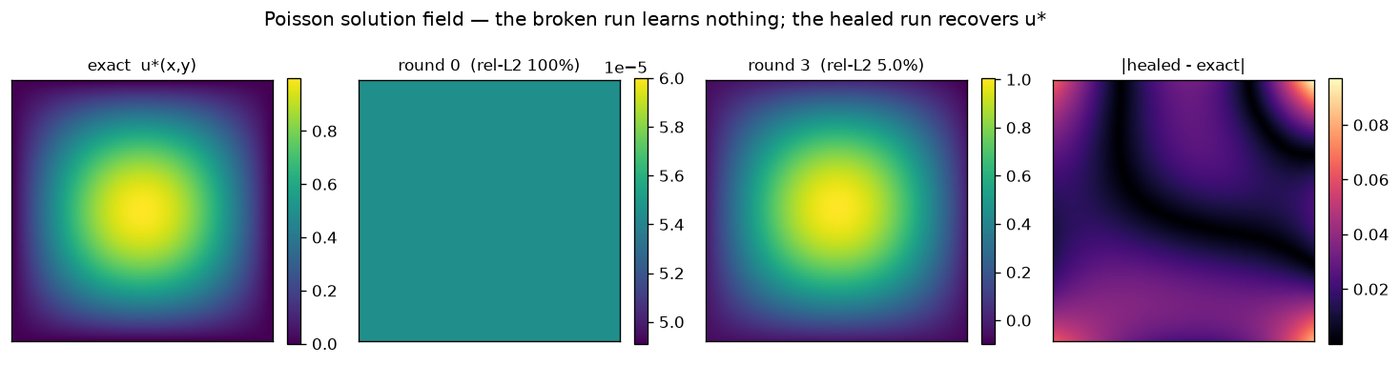
A physics-informed neural network launched with a bad configuration is automatically diagnosed and corrected in 4 rounds, with no human intervention.

100%→5%real error against the exact solution, in 4 rounds
17stotal diagnosis and correction time, on CPU
Validateddetails ↓

Round 0 learns nothing, 100% error against the exact solution of a Poisson problem with a known answer. An automatic diagnoser reads the loss history, classifies the cause (plateau, oscillation, imbalance between physics and boundary condition) and proposes the next configuration change. Four rounds later, with no human intervention, the real error drops to 5%, a reduction of 20×. It is the same logic, at scale, behind our operational copilot service: memory of past episodes guiding the next decision, with explicit confidence about what changed.

Automotive · structures · vehicle safety

A crash surrogate's confidence interval hits the statistical target

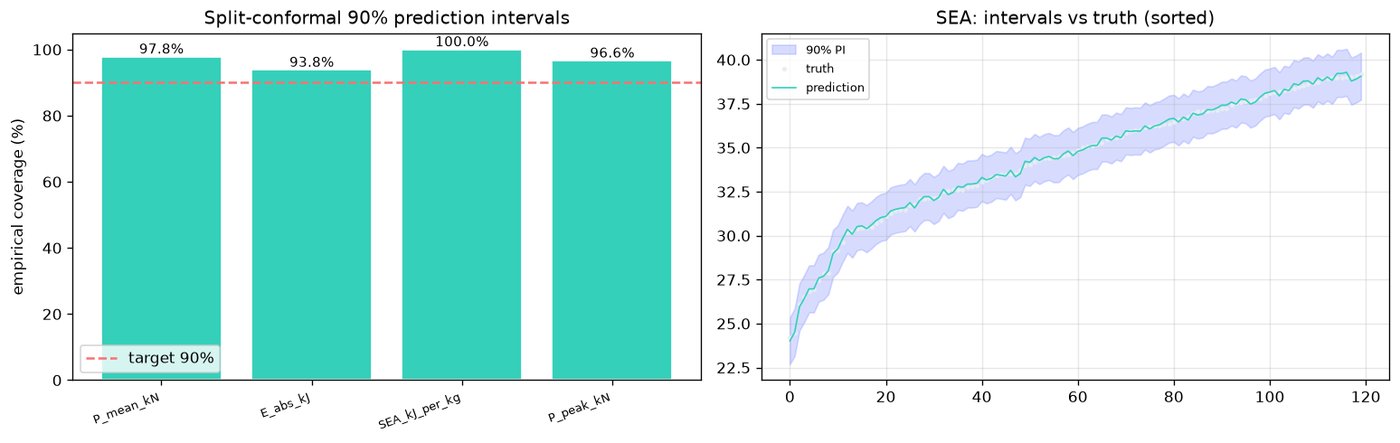
A crash energy-absorption surrogate, transferred between vehicle programs, with prediction intervals that really cover what they promise.

1.7–2.5%error after SUV → sedan transfer
94–100%real coverage of the promised 90% intervals
Validateddetails ↓

A surrogate trained on the physics of progressive collapse of thin-walled tubes (Abramowicz–Jones model) for an SUV program generalizes poorly to a sedan without adjustment (17–32% error, as expected when the regime changes), but after transfer fine-tuning with 180 sedan samples, the error drops to 1.7–2.5%. More importantly: the 90% prediction intervals built by conformal prediction really cover the true value between 94% and 100% of the time, not an invented confidence number: the same statistical honesty we apply in any verification before an engineering decision.

Climate · energy · agriculture · civil defence

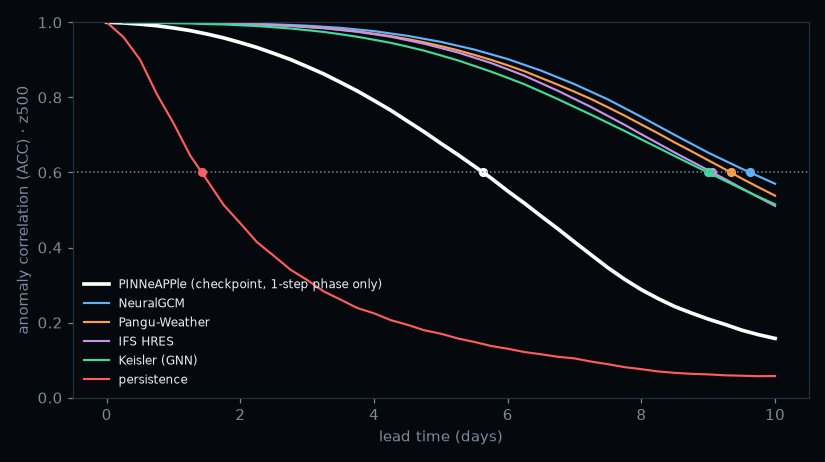
Global weather forecast: 5.6 days of useful forecast already in the first training phase

Global model trained on 33 years of public reanalysis (ERA5) and compared, on the same 2020 forecasts, with IFS HRES, Pangu-Weather and NeuralGCM. Experiment in progress: result of the first training phase.

5.6 daysof useful forecast (z500, correlation ≥ 0.6), against 1.4 days for persistence
9.1–9.6 daysfor the reference models: the distance the next training phases still have to close
In progressdetails ↓

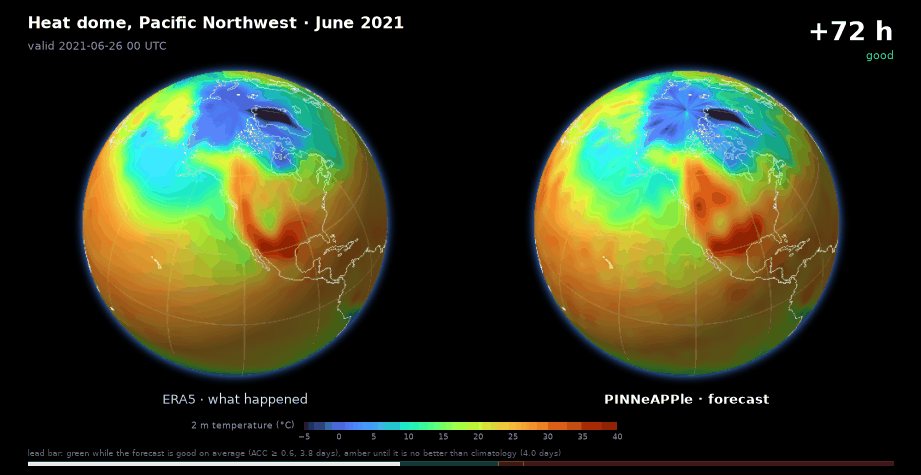
This is an honest preview. Training has phases; only the first (6-hour step, about 2 hours on 4 CPU cores) is done. The rollout phases, which carry the skill beyond 3 to 5 days, have not run yet. So, over 21 forecasts of 2020, the 500 hPa geopotential error at day 3 is 397 m²/s² (RMSE), against 104–125 for the reference models, and persistence errs by 923. Even so, the model already reproduces the structure of the Pacific Northwest heat dome (June 2021) three days ahead: on the right, the forecast; on the left, what happened. The same time-step forecasting base serves any field that evolves (wind, waves, process temperature), always with the useful horizon measured against persistence and climatology, not promised.

Anomaly correlation of the 500 hPa geopotential by forecast lead time, for PINNeAPPle (phase-1 checkpoint), NeuralGCM, Pangu-Weather, IFS HRES, Keisler and persistence

Data: ERA5 reanalysis from the Copernicus Climate Change Service (C3S), read through WeatherBench2. Contains modified Copernicus Climate Change Service information; neither the European Commission nor ECMWF is responsible for any use of it. The published models' forecasts come from WeatherBench2; only their scores are used here.

Digital twins · multiphysics simulation · operation without a reference

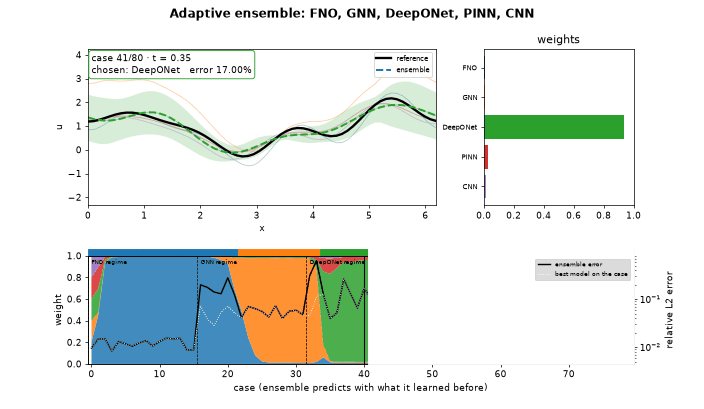
An adaptive ensemble of five physics model families errs about 3× less than the best single model

FNO, graph network, DeepONet, PINN and CNN in the same ensemble, each trained on a different regime. The ensemble picks the right model for each case, using only what it has already seen.

7.8%error over the whole stream of 80 cases, against 24% for the best single model
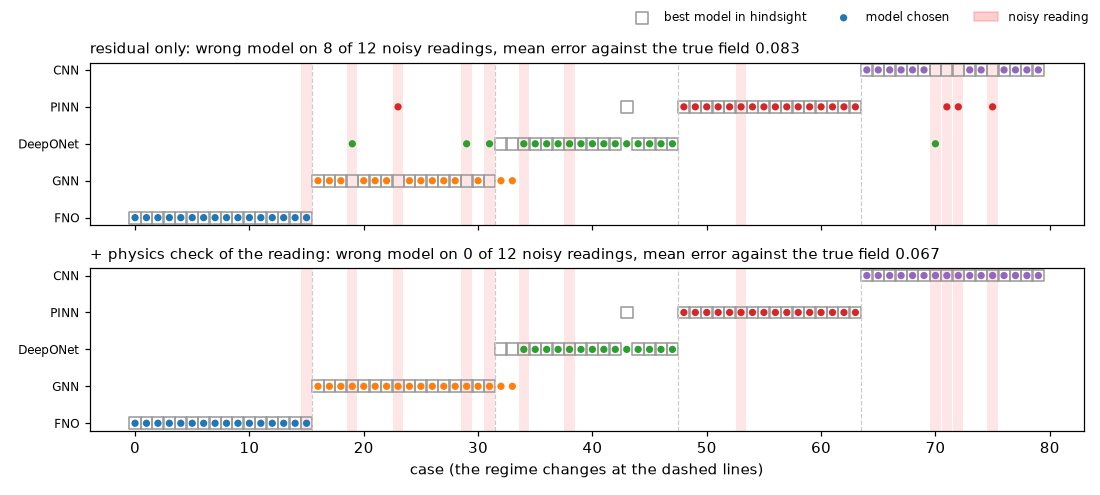
0 of 12noisy sensor readings fooled the ensemble with the physics check (8 of 12 without it)
Validateddetails ↓

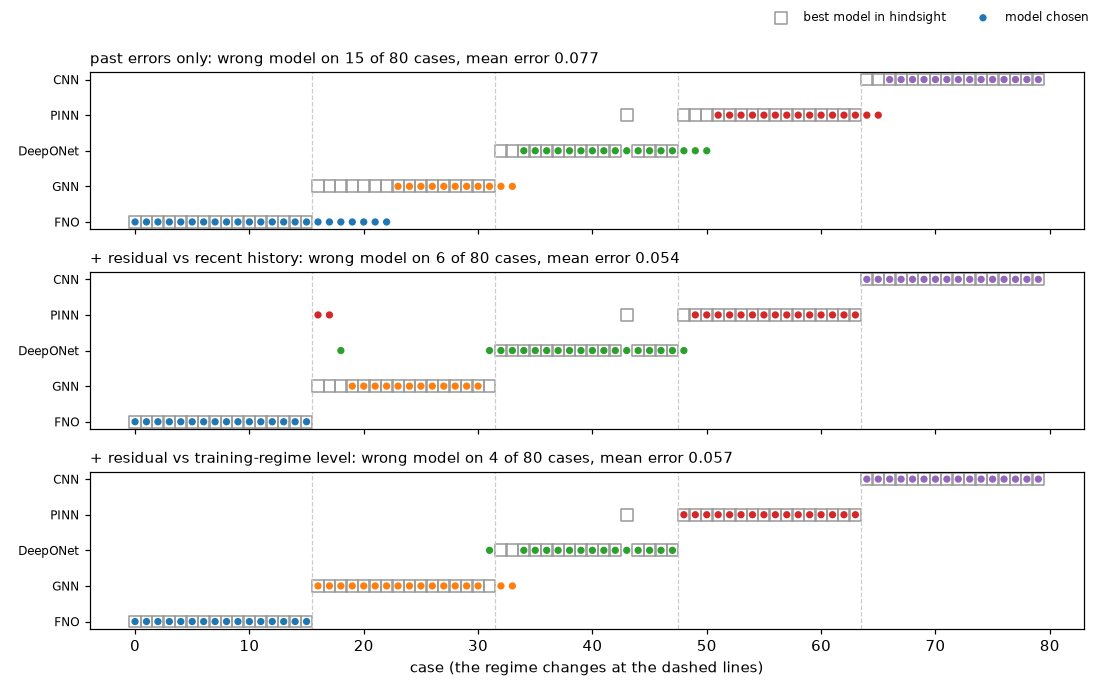
The problem is advection and diffusion with an exact solution, so the error is measured against the right answer and not against another model. The 80-case stream goes through five regimes; no single model covers them all. The ensemble switches to the right family 2 to 6 cases after each regime change and, also looking at the physics residual of the current case before predicting, picks the wrong model in 4 of 80 cases, against 15 of 80 looking only at past errors. The 90% intervals covered 90% of the points. Stated limit: it is a one-dimensional reference problem, not yet an industrial case, and the physics residual detects failure but does not rank the most accurate model. In operation, the gain is the same reasoning applied to expensive simulations: the cheap model while it serves, the solver when it stops serving.

Timeline of the model chosen in each case, with and without the physics residual of the current case Timeline with noisy sensor readings, without and with the physics check of the reading

See all validations on one page →

Principle

We don't sell AI. We solve engineering problems.

It is not enough for the model to work. It has to be verifiable: error against experiment, error against a solver, comparison against the industry baseline, Monte Carlo, uncertainty, convergence. When AI is not the best answer, we say so.

Validation · rover mobility

Sometimes the answer is not to use AI.

In one of our rover mobility cases, the cost analysis showed that, for that specific problem, a well-implemented classical numerical method was faster and more accurate than the neural network itself. We recommended the classical method, not the flashier path.

Our goal is to solve the engineering problem, not to sell AI. See the full validation →

How we know it works

Four checks every delivery passes.

01

Physical reference

A solver, a governing equation or a known experiment, never an invented target.

02

Validation

Error measured on data never seen in training, against that reference.

03

Uncertainty

Interval and margin of error always stated, never a loose number.

04

Engineering metric

Time, cost, accuracy, safety or performance, not "accuracy" in a vacuum.

How we work

Fixed-scope pilot. Defined success metric. Measured engineering gain.

01

Agreed pilot

A closed scope and a success metric defined before the first line of code.

02

Mapping & data

We understand the methodology your team already uses and structure the data available.

03

Hybrid model

Physics + machine learning to predict, simulate and optimize scenarios.

04

Validated delivery

The result compared with the traditional method, with the gain measured on the agreed metric.

The pilot

What happens when you decide to test.

Every project starts with a closed-scope pilot. No surprises: you know what you bring, what you get and under what conditions.

What you bring

  • The problem and the success metric, on one page.
  • A sample of data, geometry or documents (it can be anonymized).
  • Someone from your technical team to validate the result.

What we deliver

  • A closed scope in writing, before the first line of code.
  • A working tool or model on your case.
  • The result compared with your current method, with the gain measured, the limits and the uncertainty.

Conditions

  • An NDA before any data.
  • Initial diagnosis at no cost; timeline and price set in the closed scope.
  • Fixed-scope pilot, defined success metric and measured engineering gain.

Bring us the problem → Book a call → How the commercial model works →

Who does what

ChordIQ builds. Domus delivers.

Two companies, one project from the customer's point of view.

ChordIQ Builds

Builds the Physics AI technology: physics-based models, surrogate models, verification and the open-source PINNeAPPle.

Domus Delivers

Takes the technology into industrial engineering operations: deployment, agents and the gain-based commercial model.

Contracting Defined with you

How the project is contracted is agreed in the commercial conversation, according to your case.

Who we are

Built by engineers who understand both sides.

Open technology, delivered as engineering. PINNeAPPle is our open-source Physics AI foundation (Apache 2.0, PyPI, GitHub); ChordIQ turns that technology into validated engineering systems.

Yan Barros
Yan Barroscreator of PINNeAPPle

A physicist by training, he combines physics, AI and engineering to take scientific models into real applications. He created PINNeAPPle and works on AI applied to real engineering and industrial problems in Brazil. His background includes climate, agribusiness and solar astrophysics.

LinkedIn →
Tiago Seixas Bittencourt
Tiago Seixas Bittencourtsenior metallurgical engineer

Senior metallurgical engineer with more than 18 years of leadership in the steel industry across R&D, industrial innovation, decarbonization and large-scale operations in LATAM. MSc in Metallurgical Engineering, Executive MBA, and certifications from MIT and the University of Miami. He has led multicultural teams and delivered results such as an 8:1 ROI on innovation and R&D projects, digital transformation and Industry 4.0 solutions, and the start-up of a steel plant in Germany.

LinkedIn →

Meet the team and the partnership → See the code on GitHub → PINNeAPPle documentation →

Contact

Have a simulation that is too slow, expensive or difficult to validate?

Send us the case. We define a closed-scope pilot and a measurable success criterion, no commitment.

WhatsApp +55 84 99128-7602 Open →
E-mail yan@pinneapple.org Open →

Book a call →

E-mail and phone links sometimes do not open the right app on their own, depending on the device, so each contact above can also be copied directly. Domus contact and LinkedIn are in the footer.

Message ready. If WhatsApp did not open on its own, use "Copy message" and paste it into a chat or an e-mail to yan@pinneapple.org.

“Bring us the problem” opens a WhatsApp conversation with your message already written; “Send by e-mail” opens your e-mail app. Nothing is sent without you confirming on your side.

Talk to us